



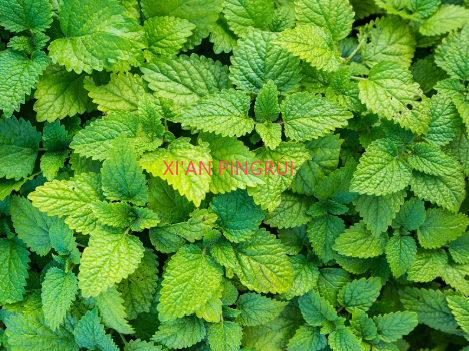
Product Introduction: Lemon Balm Extract
Product Overview
Lemon balm (Melissa officinalis L.), also known as balm mint or bee balm, is a perennial herbaceous plant in the Lamiaceae family. Its leaves have a distinctive lemon aroma and have been used medicinally in the Mediterranean region for over 2,000 years. Lemon balm extract is a functional herbal ingredient produced from its **leaves** or **aerial parts** through water extraction, alcohol extraction, or water-alcohol mixed extraction processes.
Core Active Ingredients
The quality of this product is controlled through standardized marker compounds, primarily:
Component Category | Representative Compounds | Typical Content Range |
Phenolic acids | Rosmarinic acid, hydroxycinnamic acids | Rosmarinic acid 3–5%, Hydroxycinnamic acids 17–23% |
Flavonoids | Luteolin, apigenin | Total flavonoids ≥2% |
Volatile oils | Citral, citronellol, β-caryophyllene | Varies by extraction process |
Among these, rosmarinic acid is the most important active marker and the core indicator for product quality control.
Key Functions & Applications
1. Mood Enhancement & Sleep Support
The most classic traditional use of lemon balm extract is to relieve mild mental stress and promote sleep. The European Medicines Agency (EMA) official monograph recognizes it for relieving mild nervous tension, irritability, mild anxiety, and sleep disorders. An ongoing clinical trial is evaluating the sedative effects of 300 mg doses in individuals with moderate stress.
2. Antioxidant & Anti-inflammatory Properties
Rosmarinic acid has been shown to inhibit complement-dependent inflammation. Research from Fu Jen Catholic University (Taiwan) indicates that lemon balm aqueous extract alleviates pulmonary inflammation in ovalbumin (OVA)-induced asthmatic mice.
3. Digestive Support
Traditionally used to relieve mild gastrointestinal discomfort, including flatulence, bloating, and mild cramping.
4. Antimicrobial & Antiviral Activity
Studies have shown that lemon balm essential oil exhibits inhibitory effects against foodborne pathogens such as *Tetragenococcus* spp., with the main active compounds being β-caryophyllene, citronellol, and citral. The aqueous extract also demonstrates antiviral activity against influenza virus, vaccinia virus, and herpes simplex virus.